In last year’s award-winning movie Garage, director Lenny Abrahamson and writer Mark O’Halloran told us a few unpalatable truths about a rural Ireland where crossroads and comely maidens are part of prehistory.
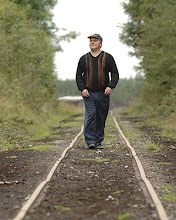
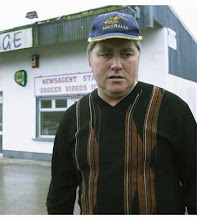
The movie’s protagonist is played by comedian Pat Shortt but although he seems a stereotype of the traditional ‘Oirish’ bumpkin of the small town, the life of ‘Josie’ says much about contemporary country and village life.
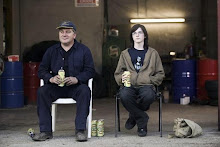
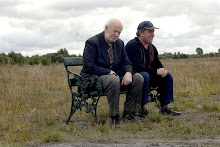
Hired for a song by his yuppie classmate to run the neglected garage where he also lives, Josie is an affable, slightly simple bachelor in middle age. His life runs according to a plain routine. At the start of the summer, Josie’s boss brings along his girlfriend’s teenage son for a part-time job and their unlikely friendship allows Josie to emerge from his shell.
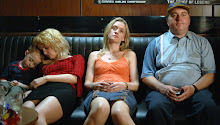
The local pub is a place that does not so much say ‘shebeen’ as ‘hasbeen,’ a joyless, grimy watering hole. A community’s bonds are rotting away and it is harrowing to behold. The women look tired and shabby, drinking themselves into a stupor in the presence of their children.
Josie is mocked and bullied by the local larger lout, who sneeringly informs him that the garage is soon to be sold off to make way for apartments.
But the movie’s seminal scene takes place in the solitude of the countryside. Accompanying the elderly Mr Skerrit, a depressive whose wife has abandoned him, Josie attempts to make small talk about the town. “Ah to Hell with the town!” Skerrit replies bitterly, “no such things as towns any more.”
These words seem to resonate like a curse when news of another desperate tragedy emerges from the forty shades of green.
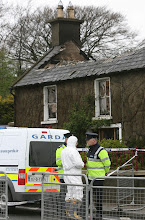
Such as the self-destruction of the Flood family in April in Clonroche, County Wexford or that of the Dunne family in nearby Monageer almost exactly a year before. Such as the awful, squalid death of Evelyn Joel, discovered in filth in her own bedroom in Enniscorthy in early 2006. Or the Brendan O’Donnell killings or Abbey Lara.
It is not as though mental illness and murder are new innovations in rural Ireland. But, in qualitive and quantitive terms, the recent tragedies seem different.
To what extent are they aberrations? To what extent are they the inevitable result of an old social network being irresistibly corroded by globalisation?
Whatever telepathic powers possessed by tabloid journalists (‘Evil’ screamed the front page of The Sun; the Irish Daily Mail described a ‘deranged father’), it is fatuous to draw conclusions in the Flood case. We have no access into Diarmuid Flood’s psyche so we will never know.
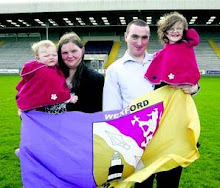
But the marriage of Diarmuid and Lorraine was more than just a union of two attractive, successful people. It bridged the Ireland of De Valera and Ahern.
Diarmuid Flood’s family were active in the GAA. Lorraine took part in the Rose of Tralee contest in 1991. And both were Celtic Tiger success stories; the husband ran a water filtration company, the wife worked as an aerobics instructor.
At the time of writing, investigations have yielded no evidence of mental, marital or financial troubles. It would be hard to imagine a family less likely to be devoured by suicide-murder.
In the case of the Dunne family of Monageer, however, blame was swiftly laid at the door of the HSE.
It was a Monday afternoon when the bodies of Adrian and Kiara Dunne, their daughters Leanne and Shania were found dead.
Concerns had been raised for the family on Friday after Mr Dunne contacted an undertaker about a burial plot for himself and his family.
In a melancholy twist, those two staples of traditional country life attempted to intervene: the local Gardai asked the local clergy to visit. When two priests came to the house over the weekend, they got no response.
This time, official wisdom was in no doubt that this was no random, unpreventable tragedy. Senator David Norris decried an Ireland where people could shop 24-7 but did not have access to health services at the weekend.
Likewise, the dearth of social workers was invoked after the death of Evelyn Joel, a 58 year old Enniscorthy woman with multiple sclerosis in January 2006.
It was only after a third party contacted a local doctor that Ms Joel was found suffering from severe malnutrition and dehydration, weighing only four and a half stone in an upstairs bedroom of the house she shared with her daughter and her daughter’s partner.
In Ireland overall, there are only 18 social workers with specialist responsibility for caring for the elderly. Following the case, Senior Helpline reported a one fifth increase in calls, many from rural areas.
That the health services are failing vulnerable and troubled people, be they in urban or rural Ireland, is without question. That more and more of what are essentially palliative measures are needed in the first place raises questions as to what is happening in the countryside.
It has been obvious for decades that the countryside’s old infrastructure of farms and small towns that drew upon them for trade and unemployment is in retreat. But the quite menacing scale of the economic downturn will perhaps have even more profound changes there than in urban areas. Driven by the massive demand for food, the sorry end results of which we are now seeing, the average farm grew in size by one fifth in the 1990s.
However, 60 per cent of the population live outside the five major urban centres. And at the height of Celtic Tiger double digit growth in 1996-2002, rural areas did not experience growth commensurate with other areas, while the population of Dublin and its three surrounding counties grew by nearly 14 per cent per year.
According ‘Rural Ireland 2025: Foresight Perspectives,’ a study undertaken by Teagasc with the help of UCD and NUI Maynooth, the decline in farming has been offset by the boom but agricultural and production-based employment is often poorly paid. Moreover, much of the growth and employment in these areas has been due to the construction industry which is now in freefall.
The report takes into account a number of variables. Most obviously, World Trade Organisation (WTO) negotiations are likely to put pressure on the industry as trade is liberalised.
But given the increasing demand on rural space as housing, roads and other infrastructure snake outwards across the countryside, land prices will remain high. Thus, the average farmer will find it difficult to purchase land and expand his business on a scale necessary to maintain international competitiveness, except perhaps through partnership and leasing. The turbulence in the commodities markets is hitting family farms, particularly those in cereal production.
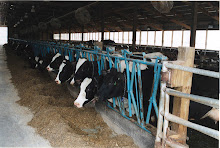
Due to lower costs, the Irish diary sector may be in a better position than other EU nations while the abolition of milk quotas may cause overall output to rise. And the turning over of land for possible biofuel production could see at least some farmers turn over pastoral land to tillage for fuel crops.
Nevertheless, the numbers of people depending on agriculture for their livelihoods is inexorably declining. By 2025, it is estimated that there will be approximately 10,000 full-time mainly diary farmers in Ireland along with 30,000 part time farmers who will derive half or more of their income from cattle and sheep production.
By that year, farming will provide employment for 70,000-100,000 people, either directly or through the agri-food industry, including processing and transport.
The Teagasc study pulls no punches on the effects of declining agricultural employment, the withdrawal of subsidies and the end of the construction-led boom: expect adverse social effects as the country and its population become predominantly suburban.
Even the environment will be changed by the withdrawal of agriculture in marginal areas of the north and west as traditional farmlands are replaced by mono-crop forestry or scrub, something already happening certain areas such as The Burren.
For just a few decades this represents a remarkable about turn: in 1950 the Irish economy was more dependent on agriculture than it had been in 1870.
But as agriculture shrinks, so the small towns of Ireland are shrinking, if not in size then certainly in character. Sentimentalising the small town culture of old, of course, is to display a very fatuous amnesia.
There are few more bitter indictments of that world and its follies than Gar O’Donnell’s empty relationship with his father, symbolic of the wasting of a younger generation forced to emigrate thanks to the stubborn and impractical mindset of its elders. That was how playwright Brian Friel depicted ‘Ballybeg’ (literally ‘small town’) in his play Philadelphia Here I Come in the mid 1960s.
Then locked in economic stagnation and cultural conservatism, the Ballbegs of today are buffeted by globalised market forces and the resultant homogenisation. The aggressive marketing and undercutting of the multi-national brands, changed travel patterns and poor infrastructure combine to increase the cost base for smaller businesses at a time of decreasing turnover.
Thus even without, for example, the proposed downsizing of An Post, long-established local shops, pubs, post offices and other small outlets are disappearing from towns and villages.
Should this matter? Pre-globalised Ireland, rural and urban, was an impoverished and restricted backwater. Nor are these trends unique to rural Ireland.The windfall has come with strings attached, strings that bind and may not necessarily be shaken loose by the end of the conspicuous consumption.
Increased criminality in the countryside is one example.
Violent death is still mainly an urban phenomenon, despite the extent to which horrors such as the Abbey Lara shootings or the killing of Traveller John Ward by Padraig Nally excited media attention. Dublin South Central is our official ‘murder capital’ according to Department of Justice figures, 83 violent killings took place there last year.
But while drug crime usually conjures up images of a track-suited denizen stalking a sink estate in Dublin or Limerick, the drug pushers of contemporary Ireland frequently live and operate well outside the main urban centres.
Not that the countryside is a good place to be a drug user. In January 2006, a leading drug treatment GP warned in The Irish Medical News that parts of rural Ireland had no GPs or pharmacies to treat drug addicts. The GP referred to a rural ‘apartheid’ in many areas due to poor infrastructure or GPs not wanting to deal with addicts.
However, the use of legal drugs is probably even more reason for concern. The same year as the Irish Medical News article on drug treatment in the countryside, HSE figures revealed that tranquiliser prescriptions amongst medical card holders had narrowly approached the one million mark.
It comes as little surprise then, to learn that a helpline set up by the HSE South, Ballyhora Development and Teagasc is receiving 325 calls per year.
Moreover, the Farm and Rural Stress Helpline’s counsellors report that the problems of stress, anxiety and depression that any city dweller might experience are compounded by the sheer isolation that exists in rural areas.
Rural decline, be it economic or societal, need not be an inexorable and terminal decay. A good example of an ameliorative measure was launched by the GAA in April and endorsed by President McAleese.
This seeks to provide a structure in the lives of elderly men in rural Ireland who are particularly vulnerable to isolation and depression.
With the freeing of trade a likely outcome of future WTO negotiations and the ending of EU subsidies, the agricultural sector will need to target specific consumer markets.
The Teagasc report comes down heavily on the weak linkage between rural economies and FDI enterprises:
“Low levels of regional innovation are related to weak institutional capacities and reflect the lack of effective operating networks between local businesses and third level colleges, research organisations, enterprise support and training agencies.”
Rectifying these inadequacies and addressing the kind of dislocation underscored by tragedies like that at Monageer requires money. But even in the current economic climate, deferring any initiatives on rural decline simply won’t do.
In Britain, studies by think tanks such as the New Economic Foundation and the Commission for Rural Committees noted that the disappearance of thousands of small outlets is creating the ‘slow death’ of rural England.
It is surely time to prevent that happening here. Otherwise the morose verdict of Mr Skerrit will turn out to have been prescient in an Ireland where “there no such things as towns any more.”

Subscribe to:
Post Comments (Atom)










No comments:
Post a Comment